
Commercial Gutter Services in Grandville, MI
Retail and Commercial Rooflines First
Our work in Grandville is weighted toward commercial and mixed-use rooflines rather than residential rounds, and that is a deliberate choice about where crews add something the city does not already have. The retail corridor built up around RiverTown Crossings on RiverTown Parkway, the frontage along Chicago Drive, and the older commercial stock near Ivanrest all share a problem that houses do not: large roof planes feeding a small number of outlets, on buildings that cannot shut for a morning. Our crews come in from the northwest along the Gerald R. Ford Freeway, which puts a Grandville site inside the same run as the rest of the day rather than at the end of it, and that is what makes early-morning work before opening practical. Building permits and inspections for the city are handled through the City of Grandville Community Development office on Wilson Avenue, which is worth knowing before a job turns from cleaning into installation.
The Northwest Approach Along the Freeway
The second thing we look at here is fascia and soffit, and it is the part of a commercial building nobody inspects until a tenant complains. Trough on a long retail elevation is often hung on board that has been carrying overflow at the same two outlets for years, and the failure appears as staining down a storefront rather than as a sagging gutter. Older residential streets running toward Broadway Street and the Buck Creek Trail have the same pattern at smaller scale. We inspect the board on every visit and report it in writing per elevation, so a property manager holding several buildings has dates and photographs rather than a weekend phone call from a tenant.

Repair Between Trading Hours
Repair on a Grandville commercial elevation is a scheduling problem as much as a technical one. The failures are ordinary enough, open seams and outlets that cannot clear a large roof plane in a downpour, but a retail unit on RiverTown Parkway or the Chicago Drive frontage cannot have a ladder across its entrance at eleven in the morning. We work these sites early, before opening, and agree the window in advance rather than turning up. On the residential streets toward Broadway Street the constraint changes to access over landscaping and drives. What stays the same either way is the sequence: check the fall along the run, test the board behind it, and price what the elevation actually needs rather than the whole building. We also flag anything found on the fascia in the same visit report, so a landlord holding several units on RiverTown Parkway is not learning about soft board a year later from a tenant.
Guards on Long Commercial Runs
Guards on a commercial run are a different calculation from a house. The runs are longer, the roof planes larger, and the cost of a blocked outlet is a wet entrance rather than a soaked flower bed, so the case for covering is stronger where canopy overhangs the roofline. It is weaker on the open retail rooflines around RiverTown Crossings, where there is little above the building to fall into the trough and a guard adds cost without removing visits. We look at what is actually overhead before recommending anything. On the older residential streets nearer the Buck Creek Trail, where mature trees do stand over the roof, micro mesh is usually the sound answer. Where a covered run does go up on a commercial elevation, the outlets stay accessible for servicing, because a guard that makes the outlet unreachable simply moves the annual visit from the trough to the downspout.

Replacement Scoped by Elevation
Replacement here gets scoped one elevation at a time and priced the same way, because commercial buildings rarely fail evenly. The elevation taking wind-driven rain off the freeway side, or the one with a valley concentrating two roof planes into a single outlet, reaches the end of its service life years before the sheltered side does. Replacing everything at once is easier to sell and harder to justify. When an elevation does come off, the exposed fascia gets checked along its full length and any soft board is dealt with before new trough goes up. Permits and inspections route through the City of Grandville Community Development office, and we confirm what a job needs before scheduling it. We also record the profile, material and outlet placement chosen per elevation, so a repair three winters from now matches the run beside it rather than approximating it.
Gutter work for Walker and the Grand Rapids metro, scoped on site before anything is quoted.
Proudly serving Walker, Grand Rapids, Grandville, Comstock Park, Allendale and Jenison for years.
Comprehensive Gutter Services Services in Walker
Tailored to Your Needs
Ten services, and the difference between them is scope rather than sales. A blocked trough, a failed seam, a fascia board that has taken on water and a full seamless replacement are separate jobs with separate costs. Start with the one that matches what your roofline is doing.
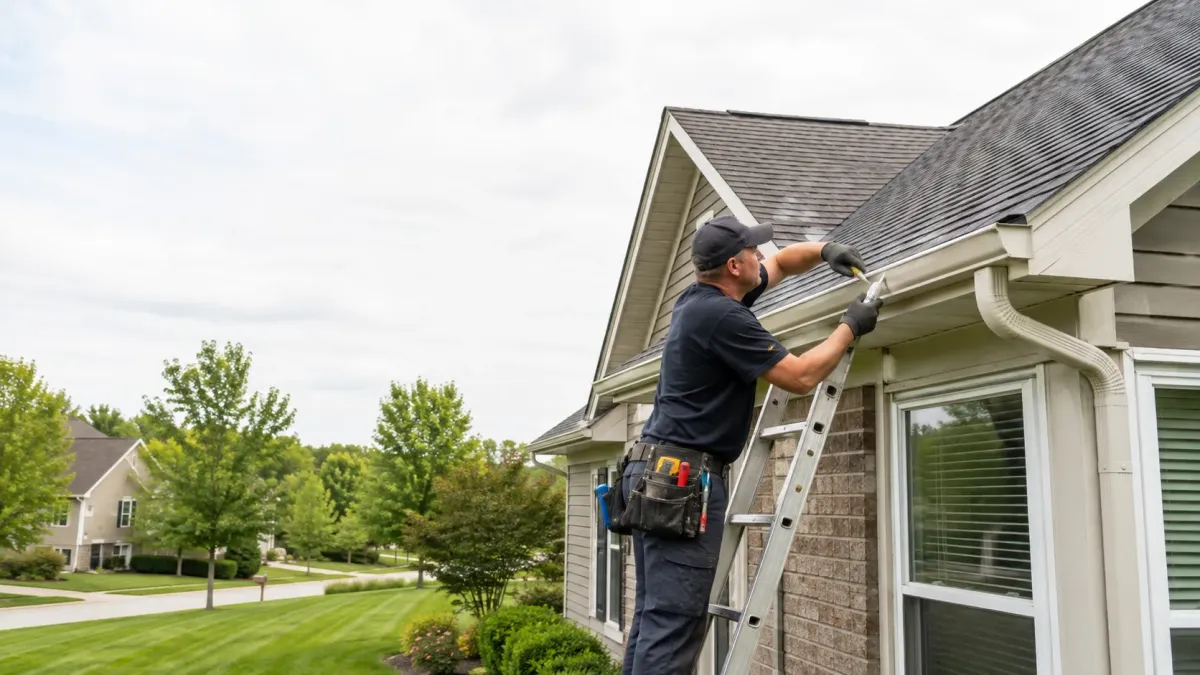
Repair establishes whether a run failed at the seam, the hanger, or the board.
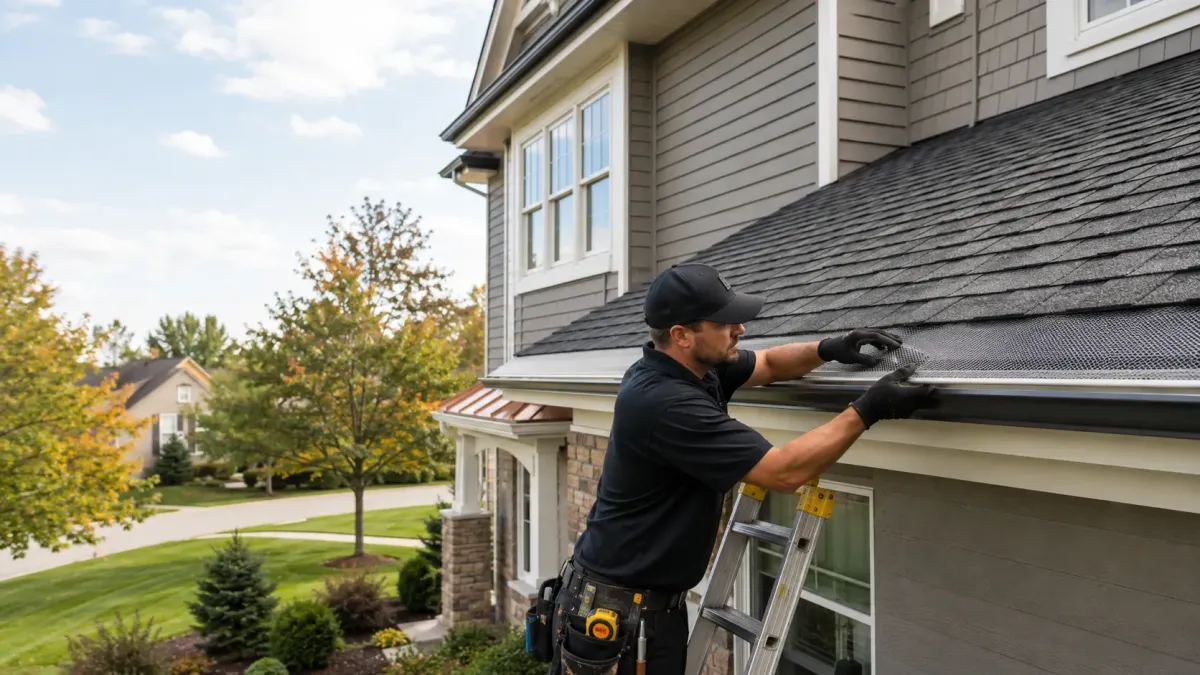
Guard selection determines how much debris stays out without shedding water past the trough.
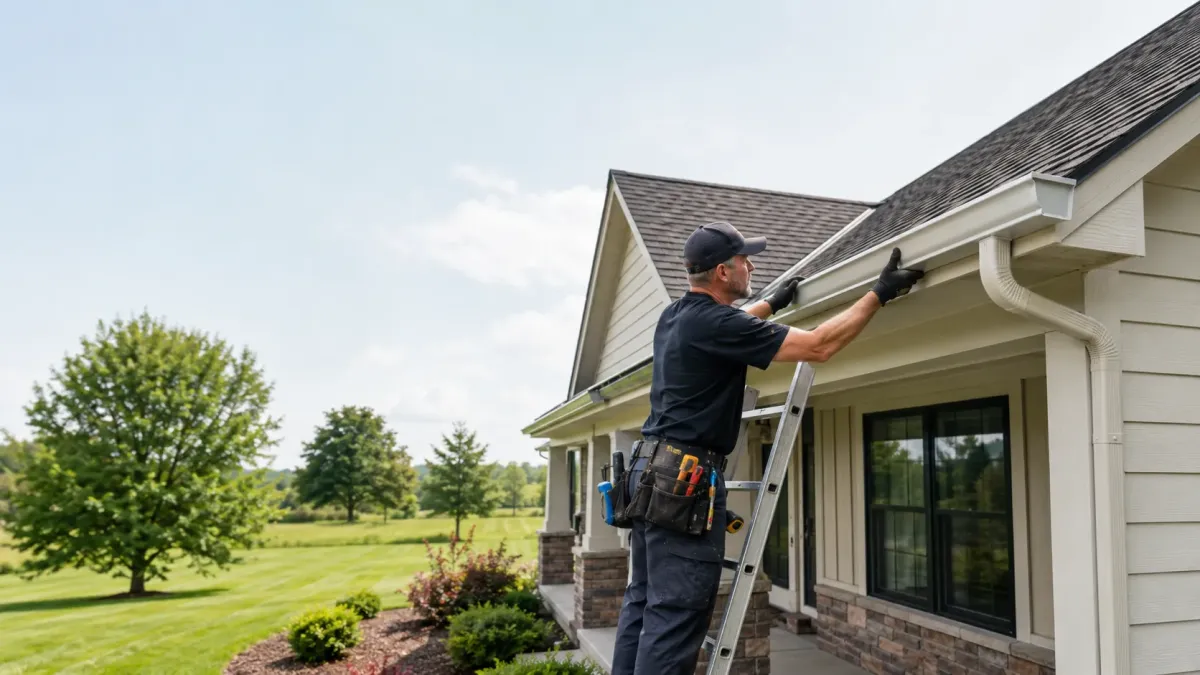
Replacement establishes new pitch, new outlets and sound board behind the entire run.
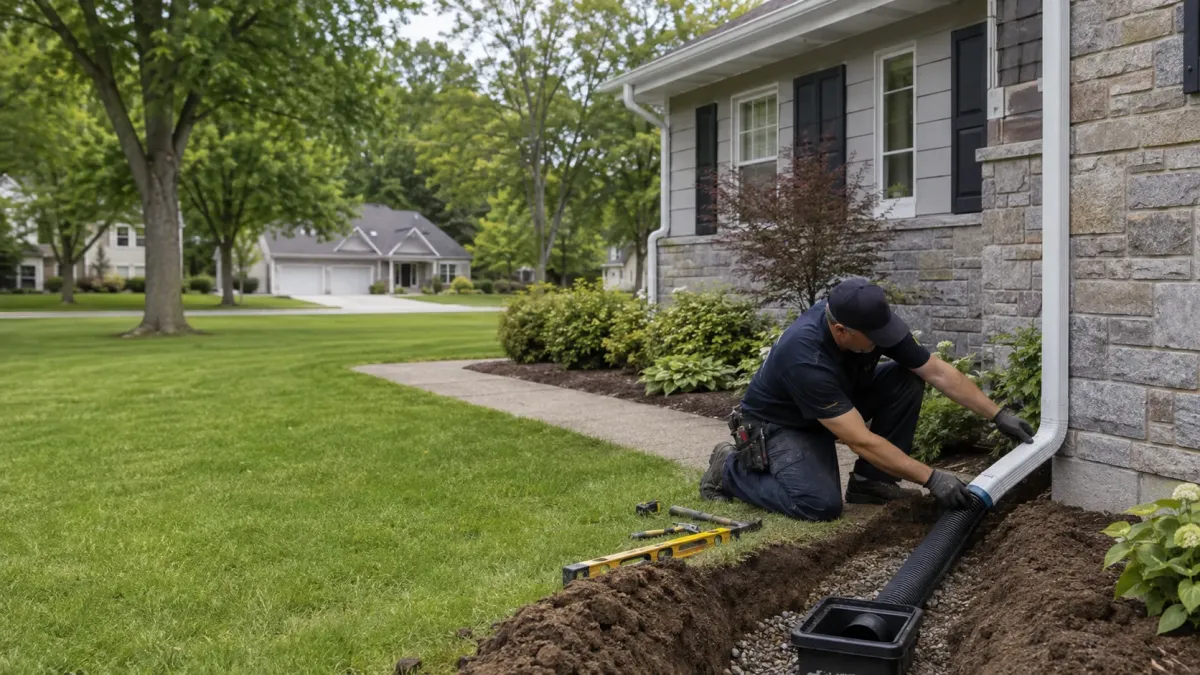
Downspout work determines where roof water actually leaves the property.
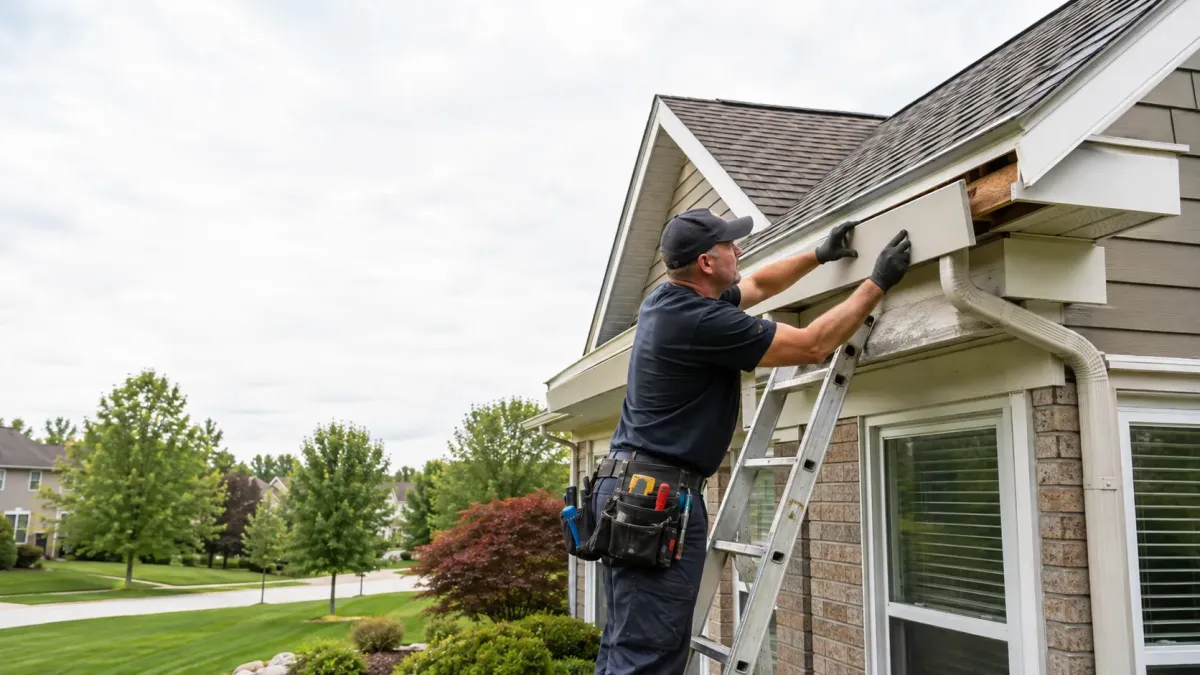
Fascia work restores the surface a gutter is fastened to and the venting behind it.
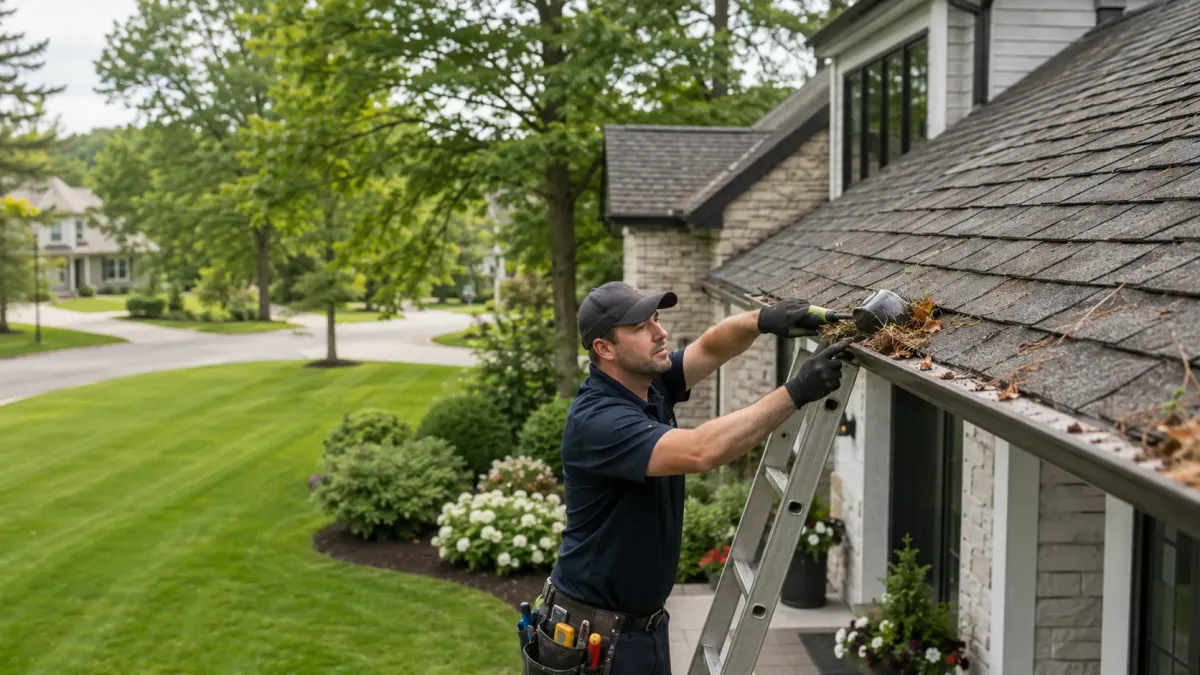
A cleaning clears the trough and shows what the run is doing under load.

Seamless installation removes the mid-run joints that open as metal moves in winter.
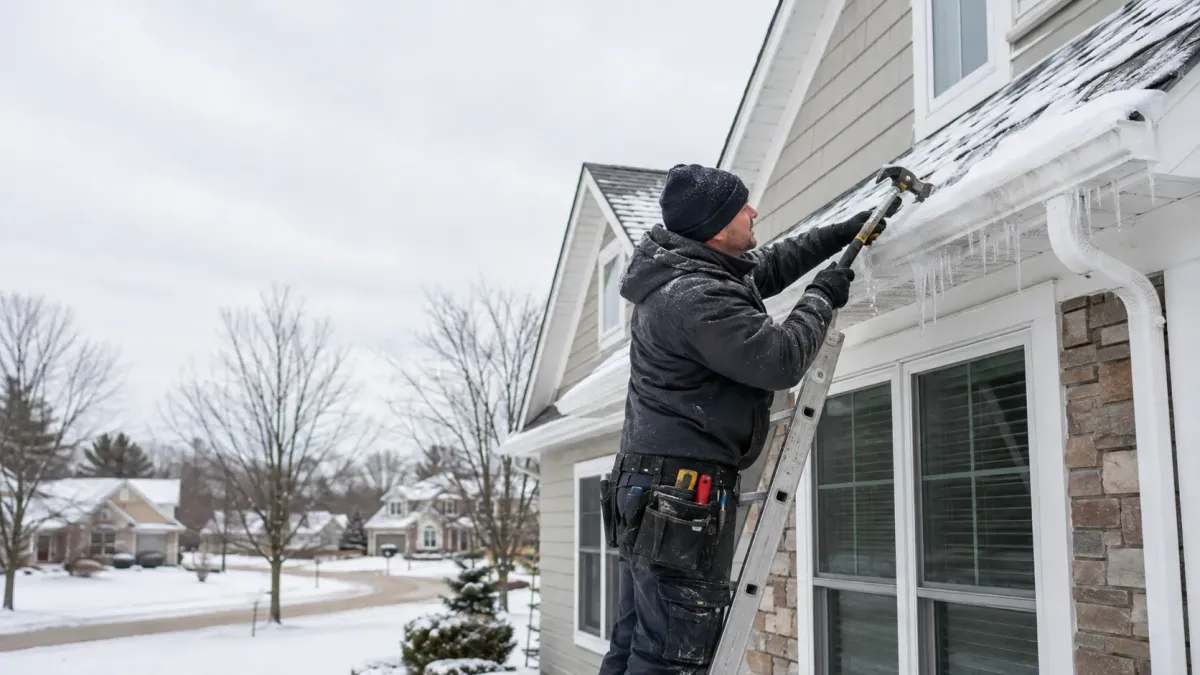
Ice work clears the eave and identifies why the dam formed there.
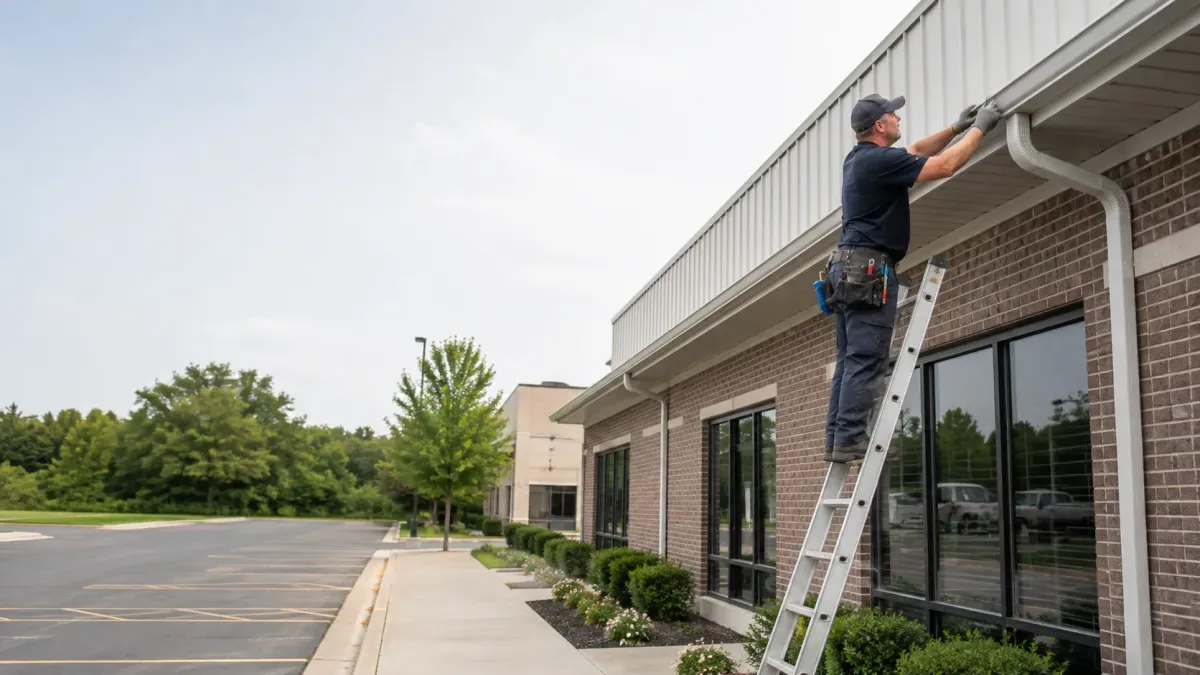
Commercial work sets a schedule and a written condition record for each building.
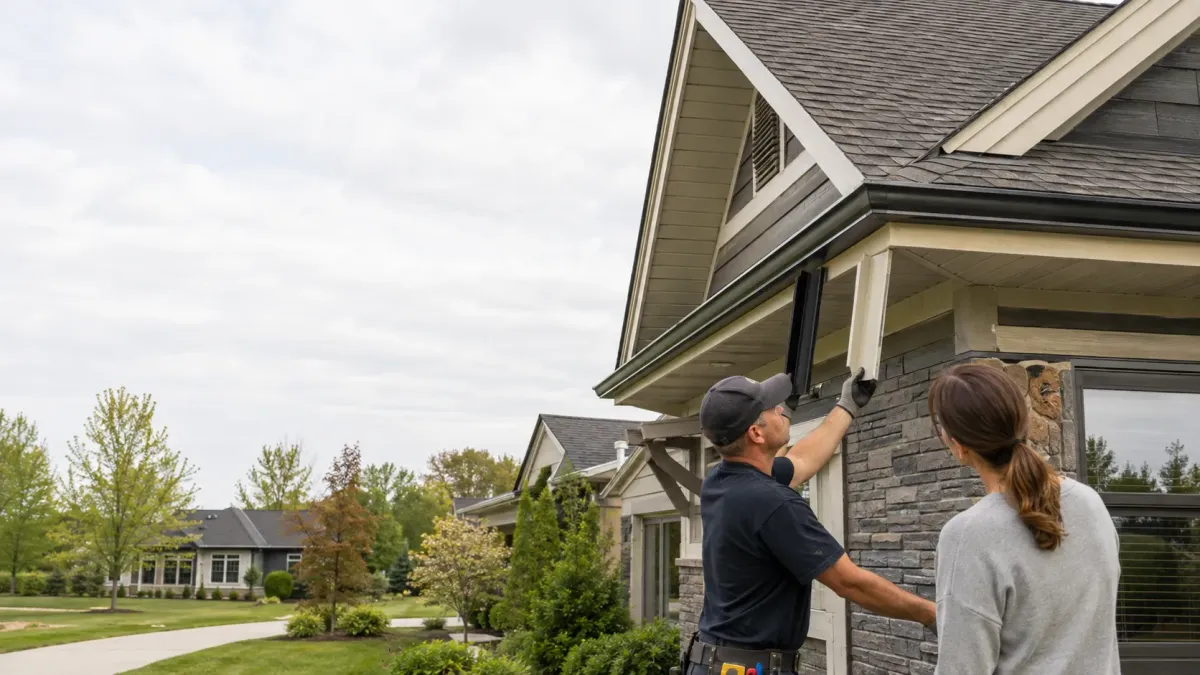
Material and profile choice sets service life, capacity and how the run looks.
Frequently Asked Questions
Gutter Services can be complex, and we’re here to provide answers to common questions. Here are some frequently asked questions from our clients.
Frequently Asked Questions about gutter cleaning grand rapids mi
How much should a gutter cleaning cost in Walker?
There is no single figure, because cost follows the total run of gutter, the height and pitch of the roof, and how compacted the debris has become. A single-story ranch with open troughs and a two-story with guards over packed leaf load are not comparable jobs. We price after seeing the roofline, and the number we give is the number on the invoice.
What is the best month to get your gutters cleaned in Michigan?
Plan on two visits, one in spring and one late in fall. The fall visit matters most here because anything left in the trough freezes solid and turns a drainage problem into an ice problem. Spring clears what came down over winter and lets you see what the ice actually did to the seams and hangers.
How often should gutters be cleaned in Michigan?
Twice a year covers most homes. Lots with mature oak and maple overhead often need a third pass in late November, after the last leaf drop but before anything freezes. If you are emptying troughs more often than that, the problem is usually pitch or an undersized downspout rather than the leaf itself.
What causes ice dams on gutters in Michigan?
Heat escaping through the roof melts snow at the ridge, the meltwater runs down and refreezes at the cold eave, and the ridge of ice that builds there holds the next melt behind it. Full or poorly pitched gutters make it worse by giving the ice a place to anchor. Clearing the trough before the first hard freeze is the cheapest thing you can do about it.
Do I need gutter guards in West Michigan?
It depends on what is above the roof and what the pitch is. Under heavy oak and maple canopy, a good screen or micro-mesh cuts cleanings back sharply. On a steep roof that already sheds well, guards can shed water straight over the trough in a downpour and cost you more than they save. We say which one you have before quoting the work.
What is the difference between seamless and sectional gutters?
Sectional gutter comes in lengths that are joined on site, and every joint is a seam that can open as the metal moves through freeze and thaw. Seamless is rolled to the length of the run on site, so the only joints are at corners and outlets. On long straight runs the difference in how long the system stays watertight is substantial.
Still Have Questions About gutter cleaning grand rapids mi?
Speak With a Trusted Gutter Services Expert Today.
What Our Satisfied Clients Have to Say About
We pride ourselves on delivering great results and experiences for each client. Hear directly from home and business owners who’ve trusted us with their Gutter Services needs.
The Trusted Gutter Services Expert Near You
Ready to hear more about expert services at ?
Contact us today to receive a detailed, no-obligation quote.


